


Locally Sourced Produce in the North Country - And Why Traceability Matters
Not all produce in a grocery store arrives the same way. Some of it traveled thousands of miles through multiple distributors before landing on the shelf. Some of it came from a farm an hour away, picked within the last few days. Both can be labeled “fresh produce”—but only one of them is genuinely locally sourced.
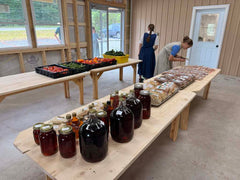
At LoPro, we work to source produce from North Country farms whenever the season allows. This guide covers what “locally sourced” actually means, how farm-to-table sourcing compares to typical grocery store produce, the real benefits of buying local, and how food traceability works in the grocery industry more broadly.

The Quick Answer: What Does "Locally Sourced" Actually Mean?
Locally sourced produce means fruits and vegetables grown on farms within a defined regional radius—often within a state or a few hundred miles—rather than shipped in from national or international distribution networks. There’s no legal definition of “local”, so the meaningful detail isn’t the word itself; it’s whether a store can tell you which specific farm a product came from.
Farm-to-table sourcing cuts out layers of the supply chain: fewer distributors, less time in transit, and less time in storage between harvest and shelf. Conventional grocery store produce, especially out-of-season items, typically travels through regional distribution centers and can spend days or weeks in transit and storage before it reaches a shelf.
One of the best ways to verify a local claim is to ask where a specific item was grown. If a store can identify the farm, that’s a strong indicator the produce was sourced locally. If the retailer can’t identify the origin behind a distributor or a broad supplier network, it’s harder to verify those local claims—a distributor can absolutely carry produce from local farms, it’s just less transparent by default.
Farm to Table vs. Grocery Store: What’s Actually Different
|
Feature |
Locally Sourced / Farm to Table |
Typical Grocery Store Produce |
|
Distance Traveled |
Often under 100 miles |
Can be hundreds or thousands of miles |
|
Time from Harvest to Shelf |
Typically 1-3 days |
Often a week or more |
|
Supply Chain |
Direct or close to direct from farm |
Multiple distributors and warehouses |
|
Seasonality |
Follows the local growing season |
Available year-round via imports |
|
Traceability |
Farm is identifiable |
Often blended from multiple, unnamed sources |
The Real Benefits of Locally Sourced Produce
Freshness is the most immediate benefit, and it’s not just about taste. Produce begins losing some nutrients after harvest. The rate depends on the crop, storage conditions, and handling, but shorter supply chains generally mean less time for quality to decline before it reaches consumers.
There’s also a real economic benefit. Research on local food spending consistently shows that money spent at local farms and businesses recirculates within the community at a higher rate than money spent at national chains, since local farmers are more likely to spend their income at other local businesses. Estimates of the exact multiplier vary by study and region, but the general pattern of more of each dollar staying local—holds up across the research.
Locally sourced produce also tends to reflect what’s actua;ly in season, which means more natural variety throughout the year rather than the same handful of items shipped year-round regardless of season.
One thing worth being honest about: “local” doesn’t automatically mean better for every consideration. Environmental footprint, for example, depends on far more than distance traveled—factors like how a farm is run, what’s grown, and how it’s transported all matter. Freshness and community economic impact are the most consistently well-supported benefits; treat broader claims with some healthy skepticism.
How Food Traceability Actually Works
Traceability is a bigger topic in food retail than most shoppers realize. The FDA’s Food Traceability Rule requires certain higher-risk each step of packing, shipping, and receiving—so that if a food safety issue comes up, the source can be identified quickly. It’s a sign of where the food industry is headed: traceability isn’t just a marketing buzzword; it’s becoming a regulatory expectation for parts of the supply chain.
For many local grocery stores, meaningful traceability starts with something simpler: knowing exactly which farm supplied a given item, and being able to tell customers that directly, whether that’s on packaging, in-store signage, or simply through staff who know the supply chain. That’s a different standard than most conventional grocery store produce, which is frequently blended from multiple growers before it ever reaches a distributor, making it difficult for anyone—including the store—to point to a single source.
Common Myths About Local Produce
Myth: “Local” and “Organic” mean the same thing.
Fact: They’re unrelated. A local farm may or may not use organic growing practices, and an organic product may or may not be locally sourced.
Myth: Locally sourced produce is always more expensive.
Fact: Pricing depends on the item, the season, and the farm. In-season local produce is often priced to be or less than out-of-season imported produce.
Myth: Grocery stores can’t offer real farm-to-farm table sourcing.
Fact: Some can. It depends on whether the store builds direct relationships with regional farms rather than relying entirely on national distributors.
Frequently Asked Questions (FAQs)
What are the benefits of locally sourced produce?
Locally sourced produce is typically fresher since it spends less time between harvest and shelf, which helps preserve nutrients and flavor. Buying local also tends to keep more money circulating in the local economy compared to purchases from national chains.
What’s the difference between farm to table and grocery store produce?
Farm-to-table produce moves more directly from a specific farm to the point of sale, with less time in transit and storage. Typical grocery store produce often passes through multiple distributors and can spend significantly more time between harvest and shelf.
What is traceable food sourcing?
Traceable food sourcing means a retailer can identify exactly which farm or source a specific product came from, rather than blended or unnamed suppliers. It's increasingly required for certain high-risk foods under federal regulation, and it's a practice some local retailers extend more broadly by design.
Where can I buy local produce in the North Country?
Grocery stores that source directly from regional farms, along with farmers markets and farm stands throughout the North Country, are the most reliable places to find genuinely local produce in season.
Is locally sourced produce healthier than regular grocery store produce?
The main advantage is freshness. Some nutrients begin declining after harvest, so produce that reaches shelves sooner generally retains more of its original quality than produce that spends longer in storage and transit.
Does buying local produce support local farmers directly?
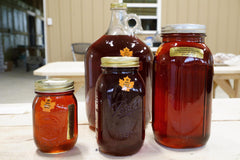
We work with North Country farms to bring seasonal produce closer to home whenever possible. It's the same approach we take with our raw, unfiltered honey and North Country maple syrup: know the source, taste the difference. Stop by LoPro in Potsdam or browse our seasonal selection online to discover what's fresh from nearby farms.
We work with North Country farms to bring seasonal produce closer to home whenever possible. It's the same approach we take with our raw, unfiltered honey and North Country maple syrup: know the source, taste the difference. Stop by LoPro in Potsdam or browse our seasonal selection online to discover what's fresh from nearby farms.


Comments (0)
There are no comments for this article. Be the first one to leave a message!