

Pure Maple Syrup vs. Pancake Syrup: What’s Actually in Your Bottle
Walk down any breakfast aisle, and you’ll find dozens of bottles labelled “syrup.” Some contain only pure maple syrup, made by boiling down maple sap until it’s reduced to a thick, pourable syrup. Others are a blend of corn syrup, sugar, flavourings, and colourings built to imitate maple’s flavour. From the front of the bottle, you can’t often tell which is which—but the ingredient label never lies.
Whether you’re pouring syrup over pancakes, waffles, oatmeal, or yoghurt, knowing what’s actually in the bottle helps you buy with confidence. Here at LoPro in Potsdam, we've spent years tasting and sourcing maple syrup from producers across the North Country, so this guide breaks down exactly how to tell real maple syrup from imitation, what makes real maple syrup worth the price, and why North Country maple syrup in particular has built such a strong reputation.


The Quick Answer: What’s the Difference?
Pure maple syrup is made from exactly one ingredient: maple sap, boiled down until most of the water evaporates and what’s left is the concentrated, 100% pure syrup you pour on your breakfast.
Pancake syrup—sometimes labelled imitation syrup, table syrup, or breakfast syrup—is a manufactured product made with sweeteners such as corn syrup, artificial or natural maple flavouring, caramel colour, and preservatives. It’s made to be cheap, shelf-stable, and identical from bottle to bottle. Pure maple syrup is the opposite: because it’s an agricultural product, it naturally varies a little from season to season, and even barrel to barrel.
The fastest way to tell them apart: check the ingredient list. Real maple syrup has one ingredient. Pancake syrup has several.
What’s Actually in Your Bottle?
The real difference isn’t just the taste—it’s how each product is made and what goes into it.
|
Feature |
Pure Maple Syrup |
Imitation Pancake Syrup |
|
Ingredients |
One: 100% pure maple syrup |
Several: corn syrup, sugar, flavourings, colourings |
|
Flavor Profile |
Complex, with notes of caramel and vanilla |
Uniform, maple-inspired sweetness |
|
Production |
Boiled and reduced on maple farms |
Manufactured in commercial food-processing facilities |
|
Coloring |
Develops naturally during boiling |
Often relies on added caramel colour |
|
Batch Consistency |
Varies naturally by season and weather |
Formulated for consistent flavour |
Why Real Maple Syrup Is Worth It
Pure maple syrup is a single-ingredient product—nothing blended in, nothing added. Beyond the flavor, it naturally contains trace minerals like manganese and riboflavin, along with small amounts of zinc and calcium. Although it naturally contains these small amounts of minerals, it’s still an added sugar and is best enjoyed in moderation.
The bigger draw for most people is flavour. Real maple has a depth—hints of smoke, vanilla, and roasted nuts—that no imitation syrup can copy. It’s also why chefs tend to reach for darker grades of real maple syrup specifically for glazes, marinades, and baking, where that bolder flavour holds up better.
How to Tell If Maple Syrup Is Real
If you’re shopping for authentic maple syrup, these four checks tell you everything you need to know.
-
Read the Ingredient List: Genuine maple syrup lists exactly one ingredient: maple syrup. If you spot corn syrup, high-fructose corn syrup, sugar, artificial flavour, caramel colour, preservatives, or stabilisers, you’re holding imitation pancake syrup, not the real thing.
-
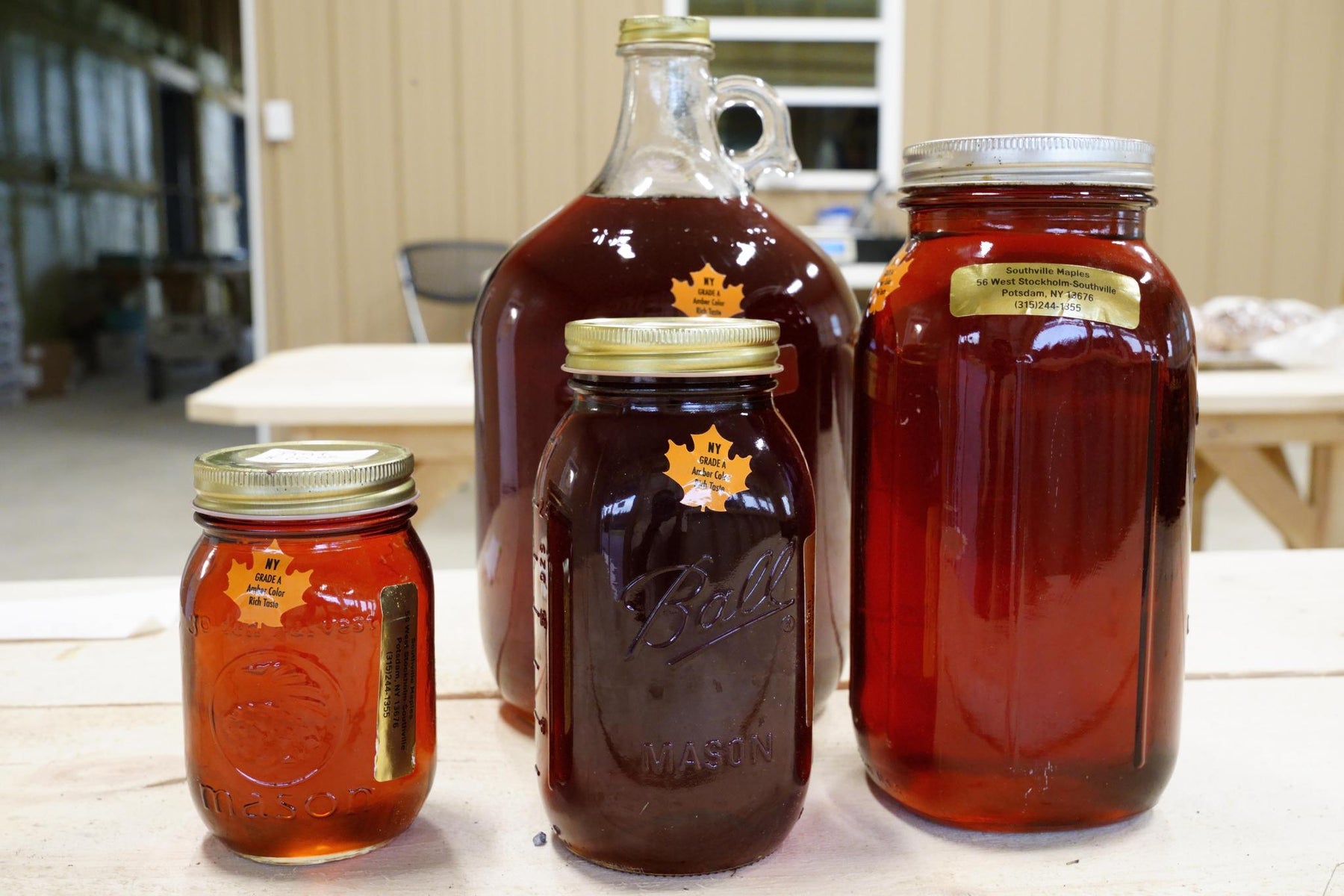
Look for a Grade. In the U.S., real maple syrup is sold under Grade A classifications that describe colour and flavour intensity—not quality. You’ll typically see:
-
Golden: delicate, light taste
-
Amber: rich, classic taste
-
Dark: robust, deep taste
-
Very Dark: strong, intense taste, best for cooking and baking
Every Grade A bottle is 100% real maple syrup. The grade just tells you when in the season it was harvested and how bold the flavour is.
-
Consider the price: Making maple syrup is slow work. It takes roughly 40 gallons of raw tree sap to produce about one gallon of finished maple syrup. That reduction process—hours of boiling to concentrate a naturally watery sap into something rich and pourable is exactly why real maple syrup costs more than the imitation stuff. You’re paying for the labour, not a markup.
-
Know Where It Comes From: Buy from producers who can tell you exactly where their syrup was made. Here in Northern New York, the late-winter cycle of freezing nights and warmer days, combined with dense sugar maple forests, creates ideal sap-running conditions—and gives North Country maple syrup its distinct, unmistakable flavour. Many local producers still use traditional evaporation methods alongside modern food-safety practices, so quality and consistency both hold up. At LoPro, we look for maple syrups from trusted North Country producers that let the quality of the harvest speak for itself.
Buying local—whether you’re in Potsdam or elsewhere in the North Country—isn’t just about getting a better product for your table. It supports the families who manage these forests, tap the trees each spring, and keep a centuries-old tradition going one season at a time.
Common Maple Syrup Myths
Myth: Dark syrup is lower quality.
Fact: Grade reflects flavour and colour, not quality. Darker syrup simply comes later in the harvest.
Myth: Any syrup labelled "maple" is pure maple syrup.
Fact: Always check the ingredient list. Plenty of products labelled "maple" are actually maple-flavoured pancake syrup.
Myth: Maple syrup keeps forever in the pantry once opened.
Fact: Once opened, pure maple syrup should go in the fridge to help prevent mould.
Frequently Asked Questions (FAQs)
Is pancake real maple syrup?
No. Pancake syrup is an imitation product typically made from corn syrup, sugar, and artificial or natural flavourings designed to mimic maple.
Why is real maple syrup more expensive?
It takes roughly 40 gallons of raw maple sap and hours of boiling to produce about one gallon of pure maple syrup. The price reflects the labour-intensive, traditional process.
Should maple syrup be refrigerated?
Yes. Once opened, pure maple syrup should be refrigerated to maintain quality and help prevent mould growth.
Does maple syrup expire?
Unopened and stored in a cool, dark place, pure maple syrup keeps for years. Once opened, refrigerate it and use it within about a year for the best flavour.
What do the maple syrup grades mean?
Grades like Golden, Amber, Dark, and Very Dark describe the colour and flavour intensity, which shift naturally as the harvest season progresses—they don’t indicate a difference in quality.
Why is real maple syrup thinner than pancake syrup?
Pure maple syrup is just concentrated tree sap, so it’s naturally thinner than pancake syrups, which are artificially thickened with corn syrup and stabilisers.
Can maple syrup crystallise?
Yes. It's a natural sugar solution, so crystallisation can happen occasionally. Gently warming the bottle or container in water dissolves the crystals.
Does darker maple syrup taste stronger?
Yes. Dark and Very Dark grades carry a more robust, intense maple flavour, which is why they’re favoured for baking, cooking, and glazes.
Is North Country maple syrup different?
Northern New York’s freezing-night, warm-day cycle in late winter creates ideal conditions for sugar maples, giving the region’s syrup its distinct, high-quality flavour profile.
How can I tell if maple syrup is pure?
Check the ingredient list—genuine maple syrup lists exactly one ingredient: maple syrup.
Is maple syrup healthier than pancake syrup?
Pure maple syrup naturally contains small amounts of minerals like manganese and riboflavin and contains no added colourings or flavourings. However, both maple syrup and pancake syrup are added sugars and should be enjoyed in moderation.
If you’re looking for authentic North Country maple syrup, stop by LoPro in Potsdam or browse our selection of locally sourced North Country maple syrup online, and taste the difference a single-ingredient syrup makes.


Comments (0)
There are no comments for this article. Be the first one to leave a message!